The works of Lord Dunsany provided many dozens of plot hooks, and monsters, for the early episodes of this podcast. It also provided material for the longest. In my fossicking I took the easy pieces, in his short story collections, and left Dunsany’s novels alone. I thought them insufficiently fantastical. I was, however, mistaken.
Time to remedy my error. This episode begins Don Rodriguez: The Chronicles of Shadow Valley, Dunsany’s first novel. It’s a little like Ray Bradbury’s novels, in that you can see its a series of short pieces which have been stitched together. We begin by meeting our protagonist, who is called Rodriguez Trinidad Fernandez, Concepcion Henrique Maria in a section I’ve cut from what follows. He might make a fine companion to any covenant. I’ll be cutting out some of the more florid patches of the work, although I encourage you to check them out.
Our reader is Ed Humpal, who gave these recordings to the public through L:ibrivox. Long term listeners may remember Ed’s voice from some of our earlier forays beyond the fields we know. These works are quite long, and Ed’s voice is quite distinct form mine, so I won’t save my comments for the end.
And now, to the Golden Age of Spain.
After long and patient research I am still unable to give to the reader of these Chronicles the exact date of the times that they tell of. Were it merely a matter of history there could be no doubts about the period; but where magic is concerned, to however slight an extent, there must always be some element of mystery, arising partly out of ignorance and partly from the compulsion of those oaths by which magic protects its precincts from the tiptoe of curiosity.
Moreover, magic, even in small quantities, appears to affect time, much as acids affect some metals, curiously changing its substance, until dates seem to melt into a mercurial form that renders them elusive even to the eye of the most watchful historian...
The first chronicle
Being convinced that his end was nearly come, and having lived long on earth (and all those years in Spain, in the golden time), the Lord of the Valleys of Arguento Harez, whose heights see not Valladolid, called for his eldest son.
The lordship is fictional, but Valladolid was the capital of the united Spain under Ferdinand and Isabella. It is in the northwest of modern Spain.
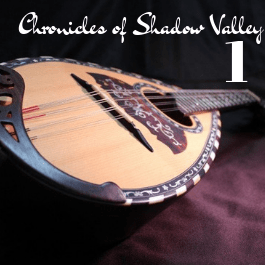
And so he addressed him when he was come to his chamber, dim with its strange red hangings and august with the splendour of Spain: “O eldest son of mine, your younger brother being dull and clever, on whom those traits that women love have not been bestowed by God; and know my eldest son that here on earth, and for ought I know Hereafter, but certainly here on earth, these women be the arbiters of all things; and how this be so God knoweth only, for they are vain and variable, yet it is surely so: your younger brother then not having been given those ways that women prize,..For himself he will win nothing, and therefore I will leave him these my valleys, for not unlikely it was for some sin of mine that his spirit was visited with dullness, as Holy Writ sets forth, the sins of the fathers being visited on the children; and thus I make him amends. But to you I leave my long, most flexible, ancient Castilian blade, which infidels dreaded if old songs be true. Merry and lithe it is, and its true temper singeth when it meets another blade as two friends sing when met after many years. It is most subtle, nimble and exultant; and what it will not win for you in the wars, that shall be won for you by your mandolin, for you have a way with it that goes well with the old airs of Spain.
Here we see signs of the flux in time which Dunsany noted at the beginning: there are no mandolins in Spain before the 18th century, because there aren’t mandolins anywhere before that time: they are a relatively late descendant of the lute. Either this familiay has an insrument no-one else has, which would explain why they get away with some much because of its music, or this is actually a lute.
And choose, my son, rather a moonlight night when you sing under those curved balconies that I knew, ah me, so well; for there is much advantage in the moon. In the first place maidens see in the light of the moon, especially in the Spring, more romance than you might credit, for it adds for them a mystery to the darkness which the night has not when it is merely black. And if any statue should gleam on the grass near by, or if the magnolia be in blossom, or even the nightingale singing, or if anything be beautiful in the night, in any of these things also there is advantage; for a maiden will attribute to her lover all manner of things that are not his at all, but are only outpourings from the hand of God.
There’s a situational bonus for his Music roll there. Also, there’s no magnolia tree: that arrives in Spain via the Columbian exchange. It’s possible the old man, in his dying, is passinfg on a Knack Virtue to his advice.
There is this advantage also in the moon, that, if interrupters come, the moonlight is better suited to the play of a blade than the mere darkness of night; indeed but the merry play of my sword in the moonlight was often a joy to see, it so flashed, so danced, so sparkled. In the moonlight also one makes no unworthy stroke, but hath scope for those fair passes that Sevastiani taught, which were long ago the wonder of Madrid.”
I have no idea if this swordmaster Sevastiani is real. I presume not, although I do note there’s also a Hermetic duelling school of a similar name, Sebastian. San Sebastian is a place: it’s the centre of the Basque territory in the north of Spain. The saint, as defender of plague victims and soldiers, was popular in the later medieval period.
The old lord paused, and breathed for a little space, as it were gathering breath for his last words to his son. He breathed deliberately, then spoke again. “I leave you,” he said, “well content that you have the two accomplishments, my son, that are most needful in a Christian man, skill with the sword and a way with the mandolin. There be other arts indeed among the heathen, for the world is wide and hath full many customs, but these two alone are needful.” And then with that grand manner that they had at that time in Spain, although his strength was failing, he gave to his eldest son his Castilian sword. He lay back then in the huge, carved, canopied bed; his eyes closed, the red silk curtains rustled, and there was no sound of his breathing. But the old lord’s spirit, whatever journey it purposed, lingered yet in its ancient habitation….silence fell again, with scarcely the sound of breathing. Then gathering up his strength for the last time and looking at his son, “The sword to the wars,” he said. “The mandolin to the balconies.” With that he fell back dead.
The commands of a dying man have a mystical power about them. It’s wise for the young man to not ignore them.
Now there were no wars at that time so far as was known in Spain, but that old lord’s eldest son, regarding those last words of his father as a commandment, determined then and there in that dim, vast chamber to gird his legacy to him and seek for the wars, wherever the wars might be, so soon as the obsequies of the sepulture were ended. And of those obsequies I tell not here, for they are fully told in the Black Books of Spain, and the deeds of that old lord’s youth are told in the Golden Stories. The Book of Maidens mentions him, and again we read of him in Gardens of Spain.
To have a think about these books: I don’t think the Black Books of Spain exist. If you are thinking of the Golden Legends, when we read “Golden Stories” then that gives as its counter the Black Legend, which is a historiographic dispute that kicked off before Dunsany wrote. At its core, it’s that Spain is used as a whipping boy by foreign historians. When the Spanish go to the New World and ransack the place, they are called conquers, vandals, and monsters, but when British or French people do exactly the same thing they are colonists, founders, and traders.
The Book of Maidens might be a reference to “The Book of the City of Ladies” by Christine de Pisan. Alternatively it might be a reference to De Mulieribus Claris (“Concerning Famous Women”) by Boccaccio. Either way, it might explain the older man’s idea that women are the true masters of things. These were early works that advocated the education of, and respect for, women.
The Gardens of Spain is a puzzle. There’s a classical piece called Nights in the Gardens of Spain, which is meant to evoke Sufi mystical dances in the third section, but I can’t place the book.
So he was buried, and his eldest son fared forth with his legacy dangling from his girdle in its long, straight, lovely scabbard, blue velvet, with emeralds on it, fared forth on foot along a road of Spain…Upon his back he had slung his mandolin.…
And all the way as he went the young man looked at the flame of those southern flowers, flashing on either side of him all the way, as though the rainbow had been broken in Heaven and its fragments fallen on Spain. All the way as he went he gazed at those flowers, the first anemones of the year; and long after, whenever he sang to old airs of Spain, he thought of Spain as it appeared that day in all the wonder of Spring; the memory lent a beauty to his voice and a wistfulness to his eyes that accorded not ill with the theme of the songs he sang, and were more than once to melt proud hearts deemed cold.
He seems to have developed a virtue like Free Expression?
And so gazing he came to a town that stood on a hill, before he was yet tired, though he had done nigh twenty of those flowery miles of Spain; and since it was evening and the light was fading away, he went to an inn and drew his sword in the twilight and knocked with the hilt of it on the oaken door. The name of it was the Inn of the Dragon and Knight. A light was lit in one of the upper windows, the darkness seemed to deepen at that moment, a step was heard coming heavily down a stairway….
And there, on the very doorstep of an Infernally-tainted inn, we leave our young hero. His statistics will be given on the blog that accompanies the the podcast. Next month, when we return to the chronicles, he hires a terrible servant, who is also suited as a companion or grog, after he dispatches the evil of the inn, making it a suitable site for a Spring covenant with a bit of spirit.


I’ve not read much Dunsany (to my shame), but I have read this! It’s so very good, I love it so much.
LikeLiked by 1 person